
Why paying the minimum on your credit card feels safe is a question millions of people ask when they do everything right and still feel trapped in debt.
You didn’t ignore the bill.
You didn’t miss the due date.
You paid what was required.
So everything must be under control… right?
For millions of people around the world, this belief is exactly what keeps them stuck in credit card debt for years — sometimes decades.
And this isn’t because they are careless or bad with money.
It’s because the minimum payment is designed to feel safe, even when it’s quietly doing long-term damage.

Why the Minimum Payment Feels Like Relief
When the credit card bill arrives, most people feel immediate stress.
The minimum payment offers emotional relief:
- it’s affordable
- it avoids late fees
- it protects your credit score
- it removes immediate pressure
Your brain interprets this as:
“I handled it. I’m being responsible.”
That sense of relief is powerful — and dangerous.
Why paying the minimum on your credit card feels safe
The Psychological Trap Behind Minimum Payments
The minimum payment doesn’t just manage money.
It manages emotion.
It reduces anxiety today, while pushing consequences into the future.
Humans are wired to prefer short-term relief over long-term stability. Credit card systems are built around that exact behavior.
This isn’t a flaw in you.
It’s a feature of the system.
What the Minimum Payment Actually Does
Here’s the uncomfortable truth:
When you pay only the minimum:
- most of your money goes to interest
- very little reduces the original balance
- the debt stays alive
In many cases, the balance barely moves — or doesn’t move at all.
You’re paying, but not progressing.
Why Your Balance Doesn’t Go Down (Even When You Pay)
People expect payments to reduce debt.
But with credit cards:
- interest is calculated continuously
- new interest replaces what you just paid
- any new purchase restarts the cycle
So even disciplined people feel confused:
“I’m doing everything right… why is nothing changing?”
The Silent Cost: Time
The most destructive part of minimum payments is not the interest alone.
It’s time.
Paying the minimum can stretch a debt:
- from months to years
- from years to decades
What feels manageable today becomes a long-term drain on:
- income
- mental energy
- future plans

Why the Minimum Payment Is Not “Bad Advice” — But Incomplete
Credit card companies are required to show the minimum payment.
That doesn’t make it evil.
But it is incomplete information.
The minimum payment:
- keeps accounts active
- keeps customers paying
- keeps interest flowing
It was never meant to be a payoff strategy.
How Small Purchases Cancel Your Progress
Many people believe:
“As long as I pay the minimum, small spending is fine.”
But even small charges:
- add new interest
- extend repayment time
- erase part of your payment effort
The result is frustration and burnout.
Why This Happens to Smart, Hardworking People
Minimum payment traps don’t require irresponsibility.
They require:
- limited financial education
- stress
- normal human behavior
That’s why this problem exists across:
- different incomes
- different countries
- different lifestyles
It’s not personal. It’s structural.
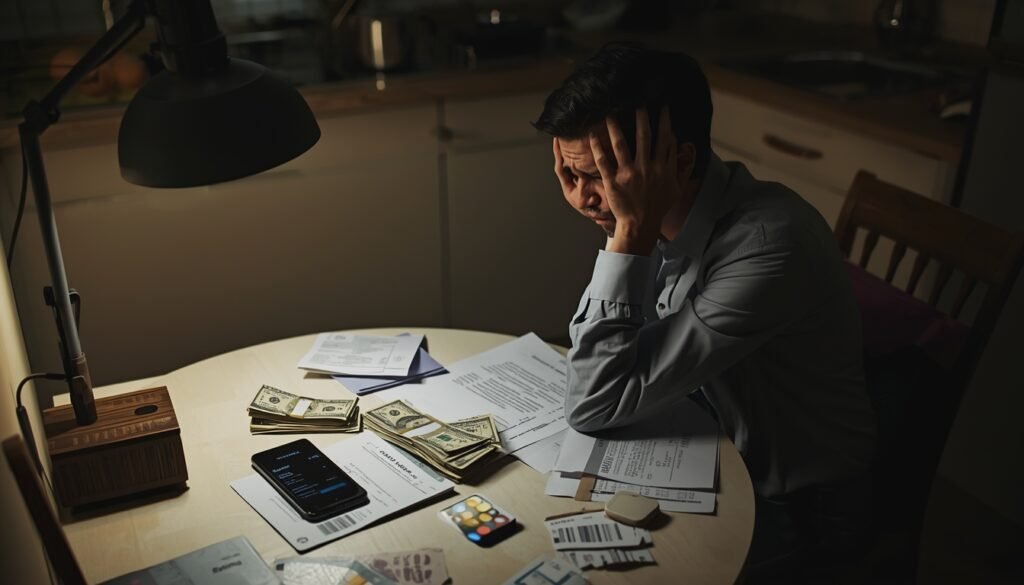
The Emotional Weight of “Doing Everything Right”
One of the hardest parts is emotional.
People feel:
- guilt for not paying more
- shame for being stuck
- confusion about what they’re missing
This emotional pressure often leads to avoidance — which makes the situation worse.
Why Motivation Alone Doesn’t Fix This
Many people try to fix the problem with motivation:
- “I’ll be more disciplined”
- “I’ll cut spending harder”
- “I’ll try again next month”
But motivation fades when progress is invisible.
Understanding beats motivation every time.
What Needs to Change Before the Debt Can Shrink
Before strategies, apps, or plans — one thing must change:
👉 Awareness of how the minimum payment works.
Once people understand:
- where their money goes
- why balances don’t drop
- how interest dominates early payments
They stop blaming themselves and start making clearer decisions.
Why This Feels Safe — And Why That’s the Danger
The minimum payment:
- avoids immediate pain
- protects your credit score
- keeps things “stable”
But stability is not progress.
Comfort today can be the enemy of freedom tomorrow.
This is why paying the minimum on your credit card feels safe to so many people, even though it slowly keeps them trapped in long-term debt without real progress.
A More Honest Question to Ask
Instead of asking:
“Why can’t I get ahead?”
A better question is:
“What is my payment actually doing?”
That shift changes everything.
For clear explanations about credit card payments and interest, see guidance from the Consumer Financial Protection Bureau (CFPB):
Final Thoughts
Paying the minimum on your credit card feels safe because it removes pressure in the moment.
But over time, it quietly:
- drains money
- extends debt
- creates emotional exhaustion
Understanding this is not about fear.
It’s about clarity.
And clarity is the first step toward real control.
👉 Continue Learning Without Pressure
If this topic feels familiar, these guides may help you understand the bigger picture:
Suggested Internal Links
- Why credit card debt keeps growing even when you try to pay it (2026)
- Should you pay off credit card debt first or start saving? A simple, honest guide (2026)
- Why credit card debt feels impossible to escape (and how to regain control in 2026)
- A simple budget that actually works: how to create one that lasts (2026)
- Why you are always broke (even when you earn a good salary) – 2026